 (2).png)
Samsung Galaxy Watch 9 & Galaxy Watch Ultra 2 In-depth Review: Which Smartwatch Should You Buy?
.png)
Samsung Galaxy Watch 9 & Galaxy Watch Ultra 2
The Samsung Galaxy Watch 9 and Galaxy Watch Ultra 2 are Samsung's latest premium smartwatches designed for different types of users. Both feature a faster processor, Galaxy AI, improved health tracking, Wear OS 7, and longer software support. While the Galaxy Watch 9 is perfect for everyday users looking for a lightweight smartwatch, the Galaxy Watch Ultra 2 is built for outdoor adventures with a brighter display, larger battery, rugged titanium design, and advanced GPS features.
Check PriceDesign and Build
Samsung has refined the design of both the Galaxy Watch 9 and Galaxy Watch Ultra2 for longer, more comfortable wear. The Galaxy Watch 9 is available in 40mm and 44mm sizes with an 8.6mm-thick Armor Aluminum body. It keeps the lightweight everyday design while introducing a new Sport Band with an air-pocket structure designed to provide a more comfortable fit during workouts and sleep. The Galaxy Watch Ultra2 continues with a 47mm titanium body, but Samsung has redesigned its internal structure to make the watch 12% thinner than the previous Galaxy Watch Ultra. The new cushion-style design integrates the display, bezel, and body, while the new Marine Band is 26% lighter and also uses an air-pocket structure for a more comfortable fit during longer outdoor activities.Display
The Galaxy Watch 9 features a Super AMOLED display with up to 3,000 nits of brightness. The 40mm model has a 1.34-inch display, while the 44mm version comes with a larger 1.47-inch screen. Both models also use sapphire crystal protection and support an Always-On Display. The Galaxy Watch Ultra2 gets Samsung's brightest Galaxy Watch display yet. Its 1.52-inch Super AMOLED screen can reach up to 5,000 nits, making information easier to see in bright outdoor conditions. The display also uses sapphire crystal protection and supports an Always-On Display.New Processor and Performance
Both watches introduce Qualcomm's Snapdragon Wear Elite platform, built on a 3nm five-core processor. This is a major hardware change for the new generation and is designed to provide faster app launches, smoother interactions, and improved efficiency. Both models run Wear OS 7 with Samsung's One UI 9 Watch interface. The Galaxy Watch 9 comes with 2GB of memory and 32GB of storage, while the Galaxy Watch Ultra2 has 2GB of memory and 64GB of storage for additional apps, music, maps, and offline content.Battery Life and Charging
Battery capacity has been upgraded across the new lineup. The Galaxy Watch 9 uses a 390mAh battery in the 40mm model and a 445mAh battery in the 44mm model. Samsung says the 40mm version has 20% more battery capacity than the previous generation. With the Always-On Display enabled, Samsung rates the Watch 9 for up to 30 hours of use. The 40mm model can reach up to 50% charge in around 30 minutes, while the 44mm version can reach around 45% in the same period. The Galaxy Watch Ultra2 receives a much larger 800mAh battery, offering 35% more capacity than the previous Galaxy Watch Ultra. Samsung rates it for up to 60 hours with the Always-On Display enabled. Fast charging can provide around 40% battery in 30 minutes, making the larger battery especially useful for travel, long workouts, hiking, and other activities away from a charger.Health and Wellness
Samsung has significantly expanded the health experience with the new Galaxy Watch generation. Both watches use Samsung's BioActive Sensor and work with the updated Samsung Health platform, which brings Sleep, Activity, Nutrition, Mindfulness, and Vitals together in one place. New health features include Vitals, Heart Health Score, Fitness Index, and Daily Cardio Load. Vitals uses overnight measurements such as heart rate, heart rate variability, respiratory rate, skin temperature, and blood oxygen to establish a personal baseline and highlight meaningful changes. Heart Health Score combines factors such as activity, sleep, body composition, and stress trends into a single wellness score. Fitness Index uses fitness data to help users understand their progress, while Daily Cardio Load provides guidance around training intensity and recovery.Sleep Tracking
Sleep tracking also receives an important software upgrade. Samsung's updated Sleep Apnea feature uses an AI algorithm to analyze breathing disruptions during sleep and categorize the results into three levels. The new Vitals experience can also show key measurements collected during sleep, helping users understand changes from their usual baseline. These features are designed for wellness and are not intended to diagnose or treat medical conditions. Availability can also vary depending on the compatible phone, region, and software version.Fitness and Training
Samsung has expanded the watches' training features with more personalized guidance. Fitness Index can use body composition and workout history to help users understand whether their current exercise level matches their fitness goals. Daily Cardio Load adds another layer by looking at accumulated cardiovascular strain and helping users understand training balance and recovery needs. This gives the new Galaxy Watches a more personalized approach to fitness rather than simply recording individual workouts. The Galaxy Watch Ultra2 also adds Trail Run as a new outdoor training feature. It provides real-time information such as elevation, climbing progress, and cumulative ascent and descent distance, helping users understand their effort during trail workouts.Hydration Guidance
The Galaxy Watch Ultra2 introduces a new hydration guidance feature for extended exercise sessions. It uses estimated sweat loss relative to body weight to calculate recommended fluid intake in real time. This feature is particularly useful during longer workouts and outdoor activities where maintaining hydration can become more difficult.GPS and Outdoor Tracking
Both watches support L1+L5 dual-frequency GPS, which is designed to provide more accurate positioning in challenging environments. The Galaxy Watch Ultra2 adds a stronger focus on outdoor tracking with its large display, rugged construction, bigger battery, and specialized training features. This makes it better suited to activities such as trail running, hiking, and other demanding outdoor workouts.Diving and Water Resistance
The Galaxy Watch Ultra2 is built for more demanding water activities. It carries 10ATM water resistance, IP69K protection, MIL-STD-810H durability, and EN13319 certification as a diving instrument. The watch can track diving information such as depth, dive time, and water temperature. Samsung is also introducing additional advanced diving features through the Ultra2 Diving app, including features related to ascent, descent, and decompression. These additional capabilities are planned for later in 2026 and require a separate app download. The Galaxy Watch 9 offers 5ATM water resistance, IP68 protection, and MIL-STD-810H durability, making it suitable for everyday wear, workouts, swimming, and general fitness activities.Connectivity
Both watches support Bluetooth, Wi-Fi, NFC, and dual-frequency GPS, while LTE versions are available depending on the model and market. The Galaxy Watch Ultra2 supports Bluetooth 6.0, dual-band 2.4GHz and 5GHz Wi-Fi, NFC, LTE, and dual-frequency GPS. The Galaxy Watch 9 also supports Bluetooth, Wi-Fi, NFC, GPS, and LTE configurations depending on the selected model. Both watches require a compatible Android smartphone running Android 13 or later with more than 1.5GB of memory, while some features require a compatible Samsung Galaxy phone and Samsung Health account.Storage and Sensors
The Galaxy Watch 9 comes with 2GB of memory and 32GB of storage, while the Galaxy Watch Ultra2 doubles the storage to 64GB. Both watches include Samsung's BioActive Sensor, temperature sensor, accelerometer, barometer, gyroscope, geomagnetic sensor, and light sensor. The BioActive Sensor combines optical heart-rate sensing, electrical heart signals, and bioelectrical impedance analysis for health and fitness tracking.Samsung Galaxy Watch Ultra 2
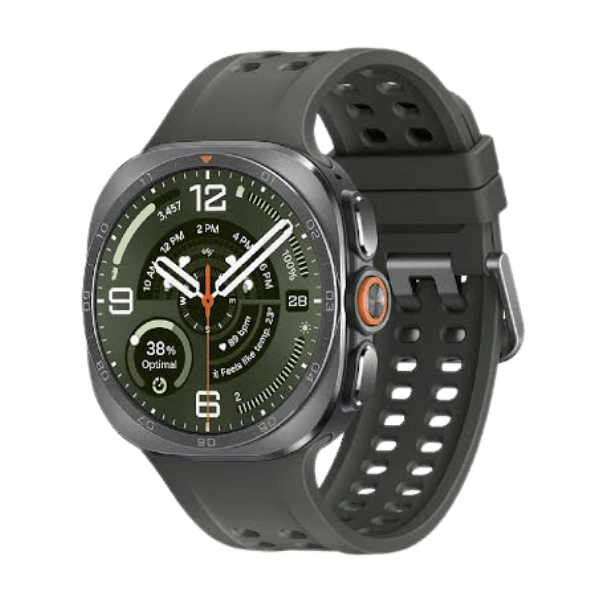
Our Verdict
The Galaxy Watch 9 is the best choice for most users because it combines excellent performance, Galaxy AI features, improved battery life, and advanced health tracking in a comfortable and more affordable package.
If you spend a lot of time outdoors, enjoy hiking, cycling, trail running, or need the longest battery life with the brightest display Samsung has offered, the Galaxy Watch Ultra 2 is the better investment.
No matter which model you choose, Samsung has delivered two impressive smartwatches that offer meaningful upgrades for everyday use and fitness tracking.